Kandinsky
01 Introduction
The Kandinsky Lesson is a digital, multimodal STEAM module designed to foster creativity and appreciation for abstract art and geometry among underrepresented learners (ages 9-14). Inspired by Wassily Kandidnsky’s work, the course combines visual arts with mathematical concepts.
Overview
Role
Project Manager
Duration
One Month
Tools
Notion, Google Workspace, Storyline 360, Figma
Audience
Elementary School Students
Deliverable
Articulate 360 Learning Module
02 Problem
Students lack accessible STEAM content tailored to their diverse learning needs.
Problem Question:How can we help students appreciate Kandinsky's art through a STEAM focused learning module?
03 Research
Research Overview
My research combined one learner interview, and the creation of several personas based on first hand experience from my work as a substitute teacher in a low-income district.
Persona
My learner was a fellow web-designer that already had some knowledge of Figma but was not proficient with its auto layout feature.
I created a persona to define my learner's goals and pain points to design a focused, empathetic, and tailored learning experience.

Persona: Amber Castillos
Age: 12
Occupation: student
Summary
Amber was born in El Salvador and moved with her family to the Inland Empire at the age of five. She is bilingual, speaking both Spanish and English fluently, and has a strong passion for reading and writing. She is less enthusiastic about Math and Science, and she enjoys spending time with her friends during lunch.
04 Goal
Backwards Design
Utilizing a backwards design approach, I aligned the content, activity, and assessment to the learning objective.
This utilizes a cascading structure that points back to the main learning goal. In the case with this learning module it was the appreciation of Kandinsky's art.
Learning alignment is the first step in designing a learning experience.
Learning Objectives
Creation of learner's very own Knadinsky inspired art piece.
Assessment
Content
Content ranges from text, interactive, and video lesson following UDL multiple means of engagement.
Practice & Feedback
Learner can apply knowledge at the end through creating their very own Kandinsky art piece.
05 Organization
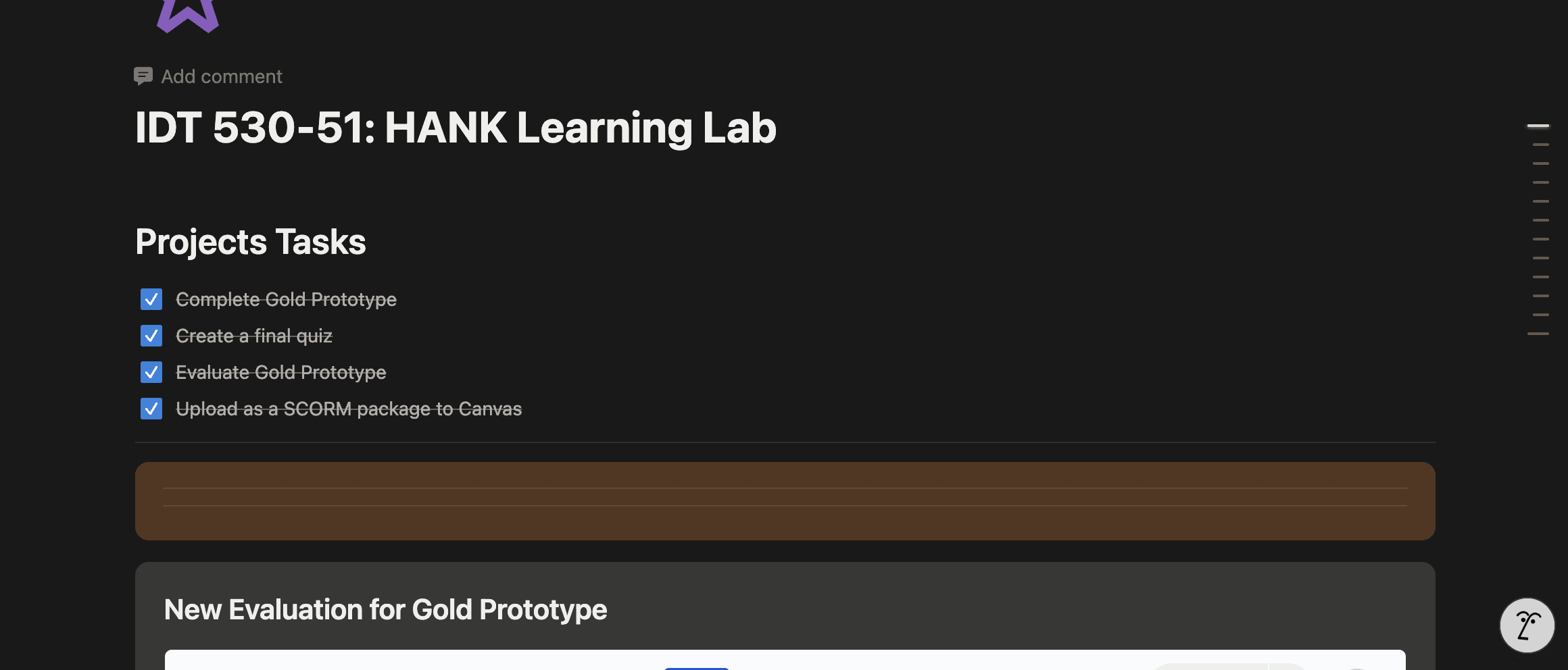
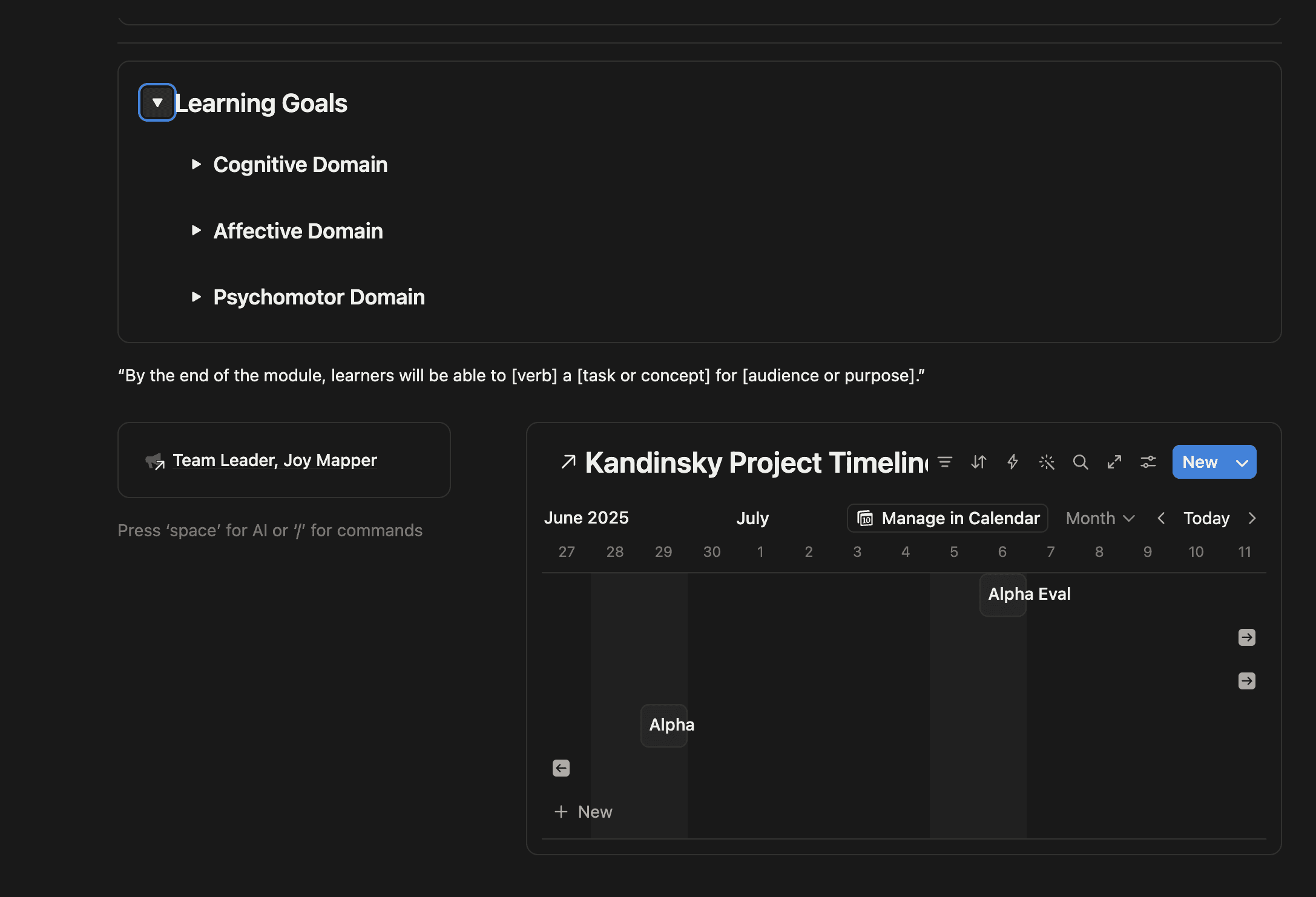
Leading the project required keeping track of learning goals and providing the necessary support to my colleagues.
Utilizing notion ensured that we were all on the same page and kept track of our tasks. I supported my team by providing them with an efficient workflow that helped us visualize our progress.
Images
06 Iteration
My team handled two iterations for this project. Our beta prototype was definitely lacking and did not meet expectations. However, we received great usability feedback from our peers that provided us with a better direction.
07 Reflection
After making the necessary changes and refining our prototype, we delivered it to our client and were met with praise.
This project showed me how to lead a team and step up confidently. I learned a lot about organization and will utilize the efficient workflow in future projects.
08 Key Takeaways
Utilize frameworks and heuristics to help improve your workflow.
Be open to changes and appreciate the feedback.
Communication is crucial to ensure that everyone is on the same page.