Ideation
01 Introduction
This learning module introduces learners to divergent thinking—the creative engine of ideation—by connecting it to real-world problem-solving.
Through quick guided activities, learners practice generating multiple possibilities, expanding beyond first ideas, and applying Guilford’s four attributes of fluency, flexibility, originality and elaboration.
As one module within Startup Mojave’s broader Ideation Course, it lays the groundwork for stronger brainstorming, more inventive solutions, and repeatable creative process they can use across projects.
Overview
Role
Learning Experience Designer
Duration
8 Weeks
Tools
Storyline 360, Moodle, Figma, Camtasia
Audience
Novice Entrepreneurs
Deliverable
Storyline 360 Module delivered through Moodle via SCORM 1.2
02 Problem
In the Mojave region, entrepreneurial energy is high among members of the local startup community, however, the prevailing mindset is product-first: people leap to solutions before deeply understanding the problems that matter.
To foster a more innovative local entrepreneurial ecosystem, the challenge is to transform this behavior—shifting individuals from building products to identifying real problems worth solving.
Problem Question:How do we improve problem-rooted innovation?
03 Research
Research Overview
My research was formed through a combination of Startup Mojave meetings, empathy mapping, and a needs analysis to understand how aspiring entrepreneurs and community members approach ideation. I found that learners often lack a shared terminology—terms like business, startup, and entrepreneurship mean different things to different people in the region.
This gives us a useful starting point: rather than reinventing the wheel, we simply need to clarify what the wheel is. Formal ideation practices are essentially nonexistent in the area, and Startup Mojave has taken the initiative to provide a welcoming space for anyone interested in entrepreneurship.
Through insights gathered from interviews and conversations with the director and members of Startup Mojave, I was able to shape the learning product’s design: a learning experience that introduces divergent thinking through short, interactive activities, helping learners practice fluency, flexibility, originality, and elaboration while shifting toward a problem-first mindset.
This module serves as an accessible on-ramp to Startup Mojave’s broader ideation curriculum, equipping participants with foundational creative problem-solving skills they can apply immediately.
Persona
My learners are members of Startup Mojave an entrepreneurial organization in the High Desert.
I created a persona to define my average learner's goals and pain points to design a focused, empathetic, and tailored learning experience.

Persona: John Herrera
Age: 42
Occupation: Business Owner
Summary
Daniel Herrera, 43, is a steady, practical leader. He values family, clarity, and efficiency. In his free time he hikes local desert trails, coaches his son’s soccer team, and tinkers with side projects.
Daniel works with his uncle running a small HVAC/AC repair business that serves the High Desert. He handles the scheduling, invoices, and basic bookkeeping, but is ready to innovate the business but is unsure how.
Learner Journey
Define
Learner Actions
Notices recurring challenges in AC business at work.
Thoughts
"I need a better way to think through these problems."
Feelings
Curious but uncertain.
Pain Points
Business advice online feels abstract and not practical.
Opportunities
Show that divergent thinking helps surface real, workable ideas fast.
Compare
Learner Actions
Searches videos and articles on brainstorming and ideation.
Thoughts
“These are long and too theoretical. I need something usable for real small-business problems.”
Feelings
Overwhelmed, impatient.
Pain Points
Content is generic, lengthy, and lacks relevance.
Opportunities
Position module as concise, grounded, and practical for local, real-world issues.
Negotiate
Learner Actions
Questions whether learning ideation is worth his limited time.
Thoughts
“Is this even for people like me? I already have ideas—I just need clarity.”
Feelings
Skeptical
Pain Points
Feels ideation is for “creatives” or startups, not trades or operations.
Opportunities
Offer the short half-hour module as a primer to the course.
Select
Learner Actions
Chooses your microlearning module linking divergent thinking to everyday business issues.
Thoughts
“This finally fits how I work. It’s short, useful, and real.”
Feelings
Motivated
Pain Points
Pain points resolved.
Opportunities
Reinforce learning with quick practice, UDL, and evidence-based design.
04 Goal
Backwards Design
Utilizing a backward design approach, I aligned the content, activities, and assessment directly to the learning objective. This creates a cascading structure in which every component supports the core goal—helping Startup Mojave learners apply divergent thinking to generate practical, problem-first business ideas.
Alongside backward design, I incorporated the SAM model to rapidly prototype, test, and refine each learning element. This iterative process ensured the module remained relevant, concise, and grounded in real community needs.
Learning alignment is the first step in designing an effective learning experience.
Learning Objectives
Utilize divergent thinking for real world problems.
Assessment
Content
Content ranges form interactive slides, text, and vide.
Practice & Feedback
Learner can practice coming up with ideas throughout the module.
05 Ideation
Ideation consisted consisted of a comprehensive understanding through discussions both of the unique characteristics of the entrepreneur in the High Desert, along with the social cultural understanding of the region.
Several meetings with the director of Startup Mojave took place during this time where we discussed the cultural sensibility of the region and some inside into what kind of course would best prepare our members, but would also provide a strong foundation for potential High Desert natives that had yet to be exposed to the Startup/Entrepreneurial world.
After consulting research, having a good understanding of our learners I opted for developing the first module of the course through a constructivist learning theory lens.
Constructivism
After an extensive literature review, I found that constructivism, the theory that learners construct their own knowledge through experience, boosts entrepreneurial creativity by fostering divergent thinking, unlike traditional education, which stifles imagination and promotes test-focused, limited knowledge.
The research I conducted favors real-world, learner-driven environments, while startup ecosystems often prioritize application over education. Therefore, providing a strong foundation in creative thinking through constructivist learning experience was the most suitable path.
in the short MVP (minimum viable product), which focuses on creative problem solving through divergent thinking.
Learning Design
The learning design was simple: Introduction - Pretest - Video Lesson - Practice Activities - Posttest
Style Guide
I created a minimal, accessible style guide focusing on monochromatic color, utilizing the familiar Figma Logo, and a sans-serif typeface for web readability.
style guide
I created a minimal, accessible style guide focusing on monochromatic color, utilizing the organization’s branding style, and a sans-serif typeface for web readability.
Logo

Typography
Traditional 6 level heading but only 3 are used with varying wieghts.
Heading 1
Heading 2
Heading 3
Heading 4
Heading 5
Heading 6
document text
Paragraph
Paragraph 2
Startup Mojave
Welcome to Ideation Module 1 - Divergent Thinking. We will begin this module with an assessment. The assessment is timed so when you are ready to begin please click the button bellow to start the module.
colors
The module's color palette is designed to evoke a minimalist tech design with a focus on accessibility and readability.
Accessibility Statement
All primary and secondary brand colors within Mimetic Order’s design system have been tested against WCAG 2.2 AAA & AA standards — the highest level of web accessibility certification.
This Ensures
Readability for users with low vision or color impairments.
Adequate contrast across both text and non-text UI elements.
Consistency in perception under various display and lighting conditions.
Compliance verified via WebAIM Contrast Checker and Contrast Grid tools.
Hex:#EAB53E
Hex:#FFE294
Hex:#FFF4D6
Hex:#242424
Hex:#646464
Hex:#CFCFCF
Background Colors
Hex:#FFFFFF
Hex:#000000
example
Startup Mojave
Welcome to Ideation Module 1 - Divergent Thinking. We will begin this module with an assessment. The assessment is timed so when you are ready to begin please click the button bellow to start the module.
button style one
button style two
06 Design Prototyping
Several Prototypes were created in conjunction with design layout. These prototypes were used to structure the layout within Figma.
Images
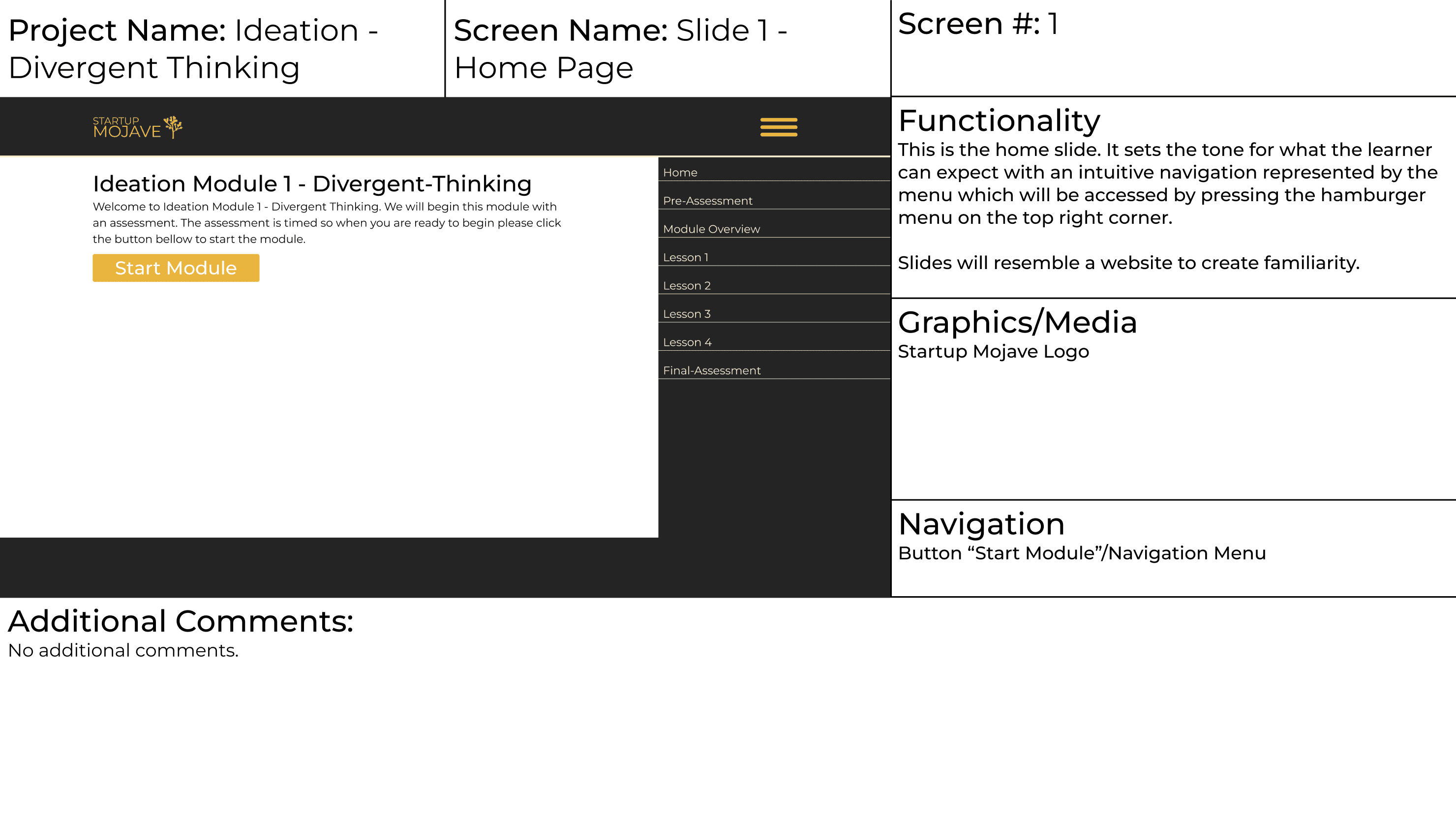
Storyboard Concept
This screenshot was the first concept of the design. It made the development process a lot easier, especially since I had proposed a structured layout and dropdown menu for course navigation. The next step would be to create the Alpha Prototype.
Alpha Prototype Screenshots
The following screenshots are of the Alpha Prototype. These screenshots show the early stage. With this first stage the focus was on functionality and learning design.
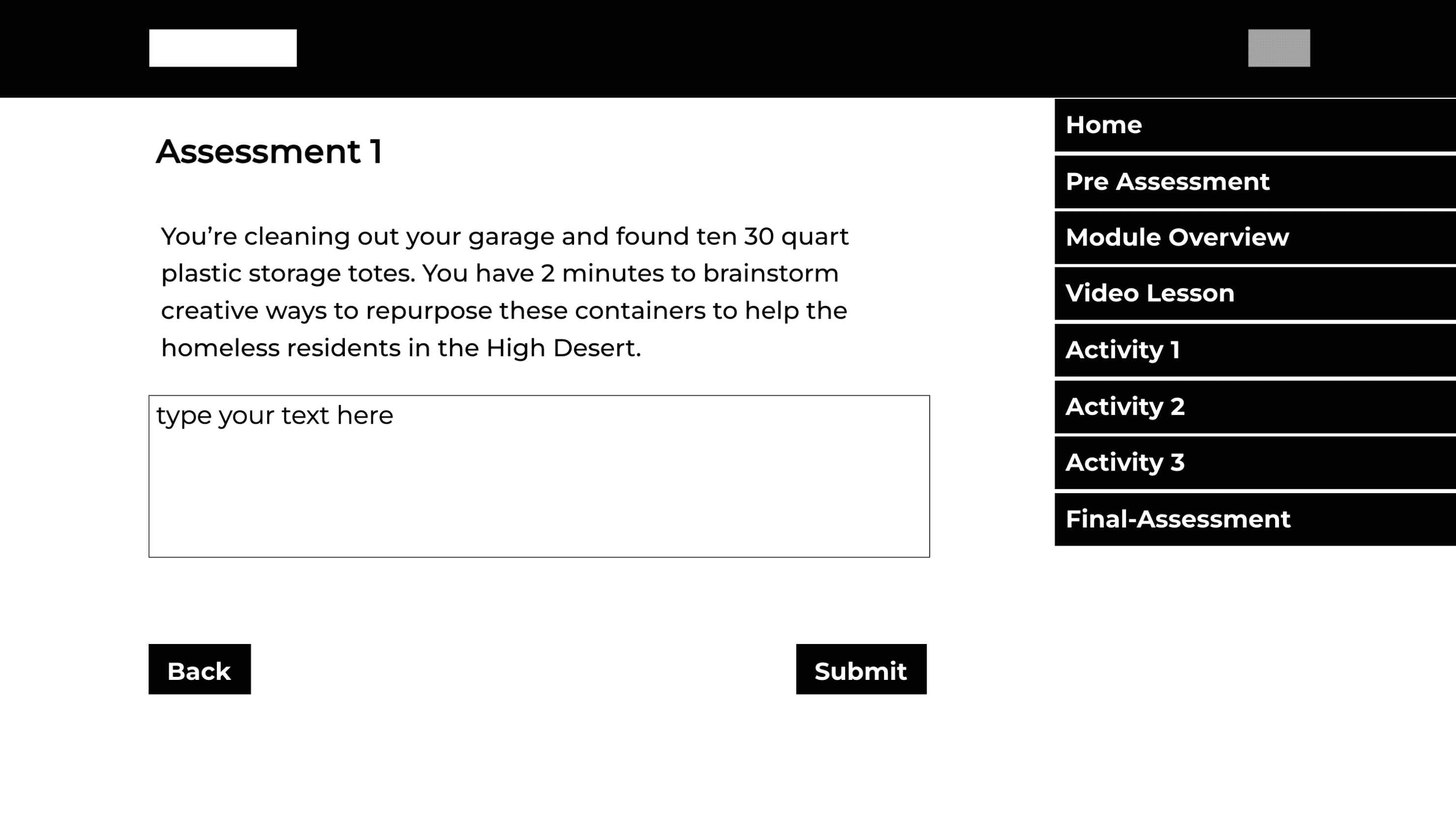
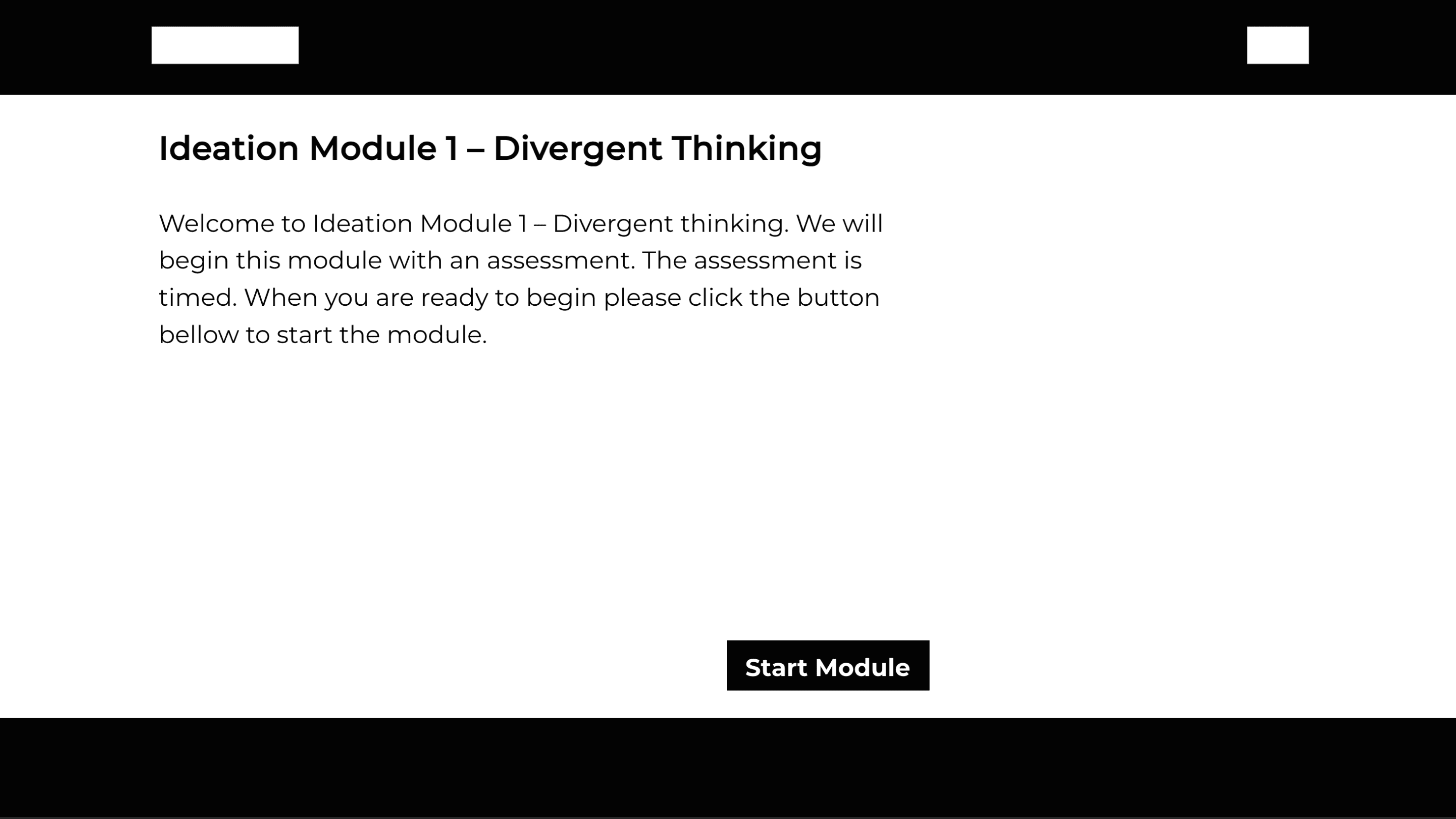
Give the Alpha Prototype.
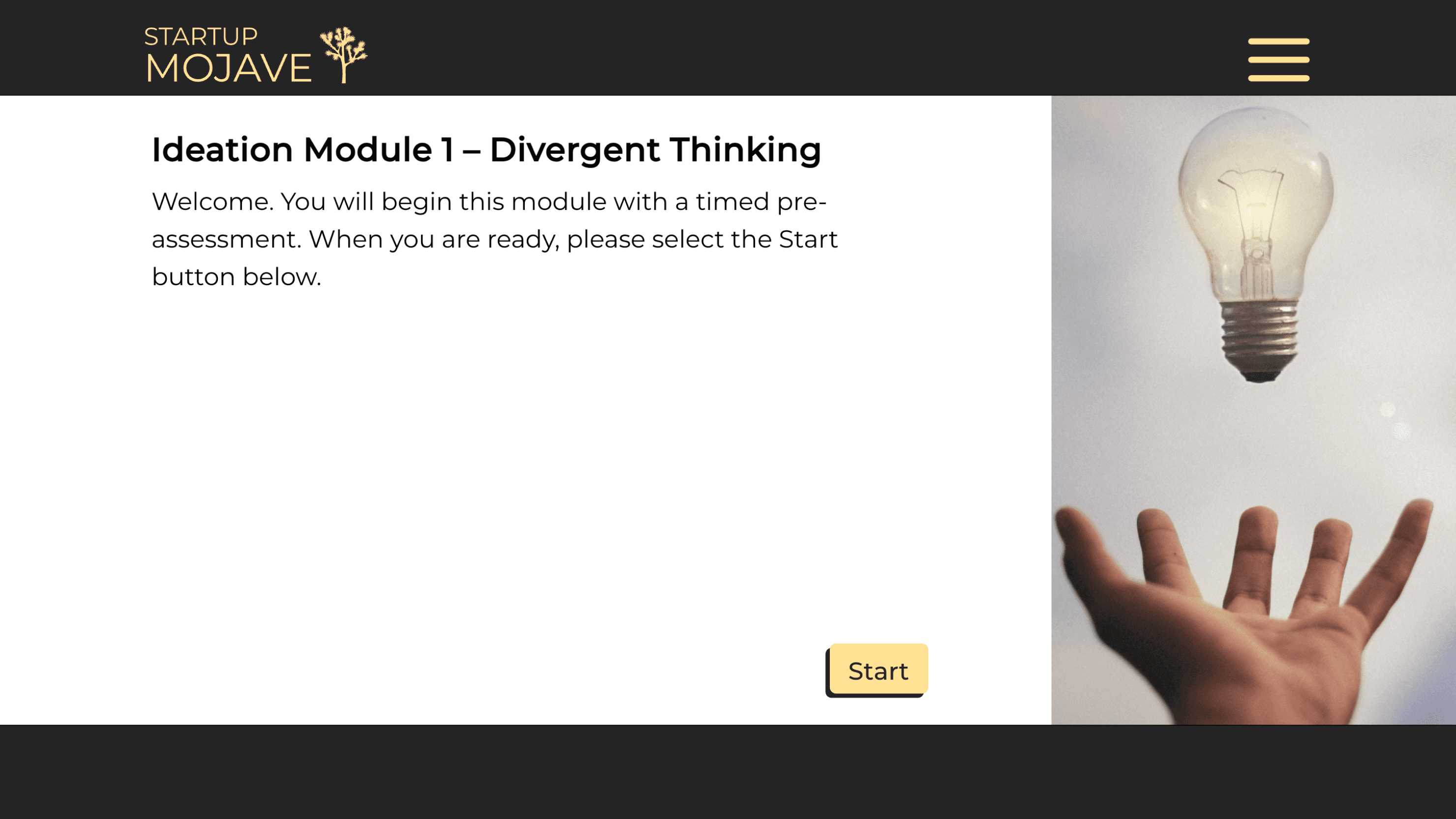
Beta/Gold Prototype Screenshots
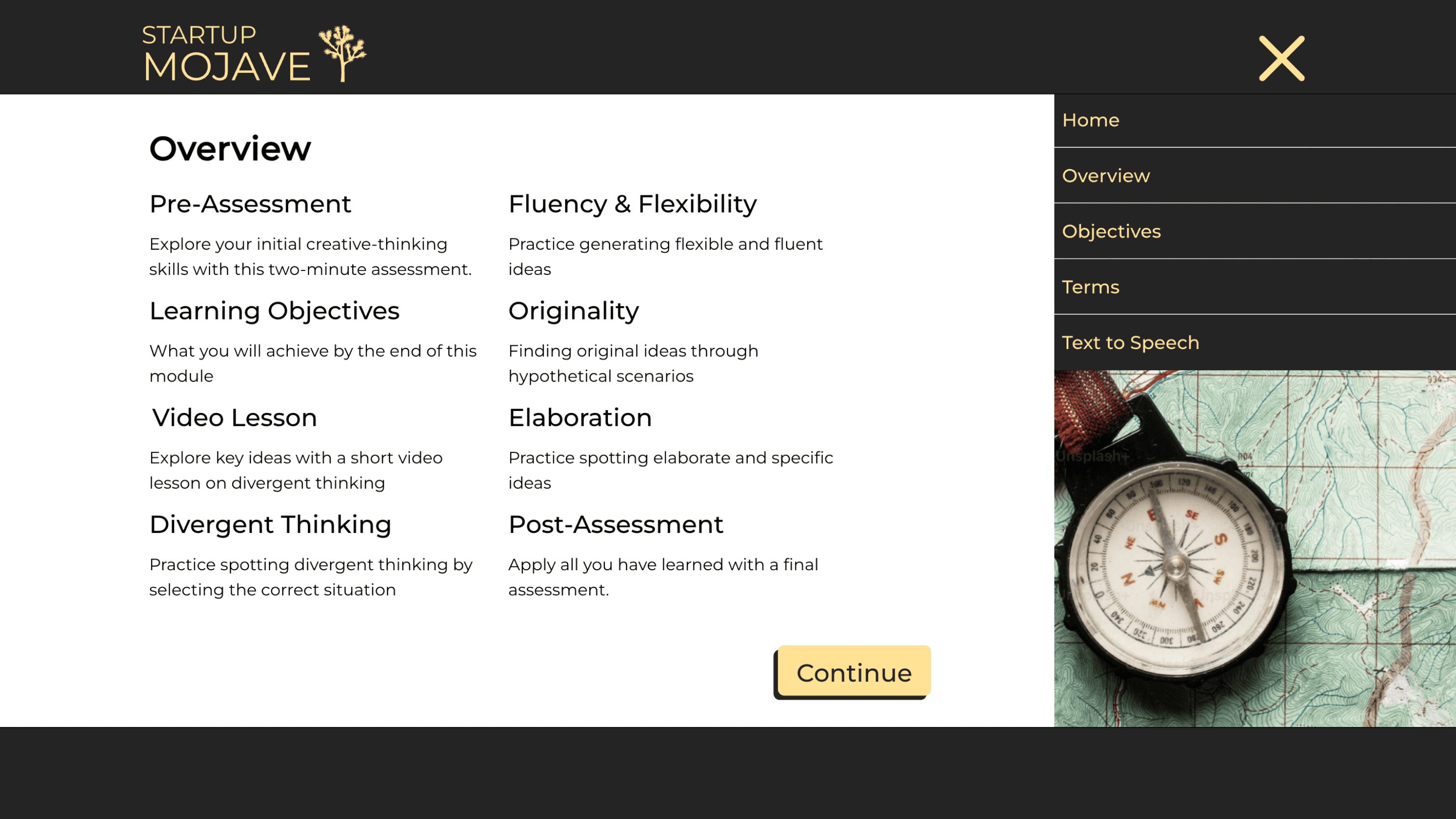
Not much change occurred between my Beta/Gold prototypes. It was primarily stylish with the addition of images and a few components.
Moodle Upload
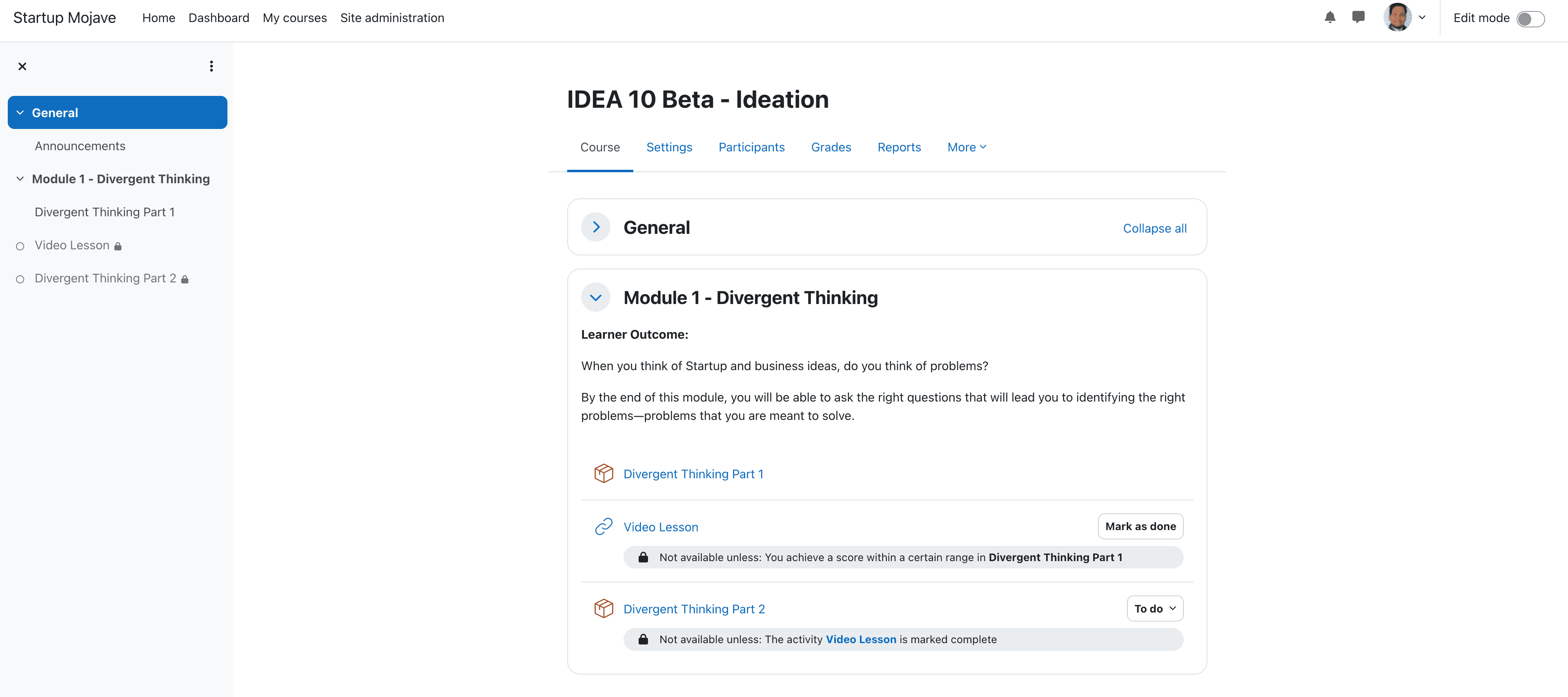
The module was divided into three parts and uploaded to Moodle as the first module in our IDEA 10 Beta - Ideation series.
07 Testing & Iteration
We have moved onto the testing phase.
08 Results
We expect results to be positive.
09 Reflection
So far, with the minimal usability testing, that I've done of my product, I've found that learners are curious and like the approach.
The implementation of an alternative uses test to be done within the comfort of one's home reduces the thinking anxiety among learners. It is too early to know whether this can positively impact ideation or whether a more stakes environment would be better.
10 Key Takeaways
Testing is key!